18 MINUTE READ
What will you read about Dadra and Nagar Haveli & Daman and Diu architecture in this blog?
- Background and History of Daman and Diu
- What makes Daman and Diu Unique?
- Portuguese Buildings in Diu and Their Conservation
- Historic Buildings in Daman and Diu
- Some Other Landmarks and Architectural Marvels in Daman and Diu
- Background and History of Dadra and Nagar Haveli
- Architecture of Dadra and Nagar Haveli
- Tourism in Dadra and Nagar Haveli
- Let’s Conclude
Background and History of Daman and Diu
The Union Territory (UT) of Daman and Diu comprises two districts, Daman and Diu, along the western coast of India, about 700 kilometers away from each other. Daman was the headquarters of the administration of the UT. Daman is geographically situated on the mainland close to the southern edge of Gujarat, with Vapi—13 kilometers away—being the nearest railway station on the Western Railway link between Mumbai and Surat. Mumbai Central is about 167km, and Surat is about 95km from Vapi. Diu, in contrast, is an island in Gujarat’s Junagarh district that lies off the coast of Una. The closest train station is Delwada, which is only 9 kilometers away, although there are significant train connections from Veraval, which is 90 kilometers from Diu. Moreover, Diu also includes Ghoghla on the mainland and Simbor, a small enclave in Gujarat, 25 kilometers away from Diu (Government of India, 2020).
With an area of merely 112 km², Daman and Diu was the smallest administrative area on the mainland of India. The two districts were geographically isolated by the Gulf of Khambhat, as the boundaries were formed by Gujarat and the Arabian Sea. Traditionally, the territories were controlled by the Portuguese from the 16th century until they were annexed by India under Operation Vijay in 1961. Daman and Diu were governed together with Goa initially as the UT of Goa, Daman, and Diu until Goa became a state in 1987, when Daman and Diu became a distinct UT.
Daman (Portuguese: Damão) and Diu were Portuguese strongholds together with Goa and Dadra and Nagar Haveli for more than four centuries. Portugal acknowledged India’s annexation only in 1974, after the Carnation Revolution. The region was at times also under the power of local leaders, such as the Kolis. Goa, Daman, and Diu existed as one UT until May 1987, but Daman and Diu remained a separate UT afterwards, even though they were separated by about 650 kilometers by road (Kale, 2019).
In November 2019, tensions increased in Daman after Collector Rakesh Minhas imposed Section 144 to limit assemblies, slogan-shouting, and loudspeaker usage. Government schools at Bhimpore and Moti Daman were temporarily made into jails due to protests over land title disputes involving native fishing people. The 2019 Daman Indigenous Land Clearing Protests resulted in the arrest of more than 70 protesters, with many displaced fishermen left without shelter near the remains of their demolished houses (Sharma, 2020).
Daman District
From the second century BCE to the thirteenth century CE, Daman was part of Lata, one of the seven divisions of Aparant or Konkan Vishaya. The region was annexed by Emperor Ashoka in his Mauryan Empire, which later saw the rule of Satavahanas, Kshaharatas, Abhiras, Traikutakas, Vakatakas, Kalachuris, and Chalukyas. Daman was subjugated by the Gujarati Sultan Mahmud Begada in the latter part of the 15th century. It was then given to the Portuguese in 1559 after a deal with the Sultan of Gujarat, and it remained under Portuguese control until India gained its independence in 1961 (Thakur, 2015).
Diu District
The history of Diu dates back to the Mauryan Empire (322–220 BCE). Chandragupta Maurya expanded his rule over Saurashtra, and Buddhist missionaries propagated teachings along the western coast, including Diu, during Ashoka’s rule. Diu was later subject to Indo-Greek, Kshaharata, and later dynastic regimes for more than a thousand years. By the early 15th century, Diu was under the Vaja dynasty but was seized by the Muslim Sultans of Gujarat. When Mughal incursions threatened Sultan Bahadur Shah in 1535, he allowed the Portuguese to construct a fort at Diu in exchange for protection. But in 1546, the Portuguese finally seized it, and they remained in power until 1961 (Mehta, 2017).
What makes Daman and Diu Unique?
1. Architecture: Fusion of Indian and Portuguese Heritage
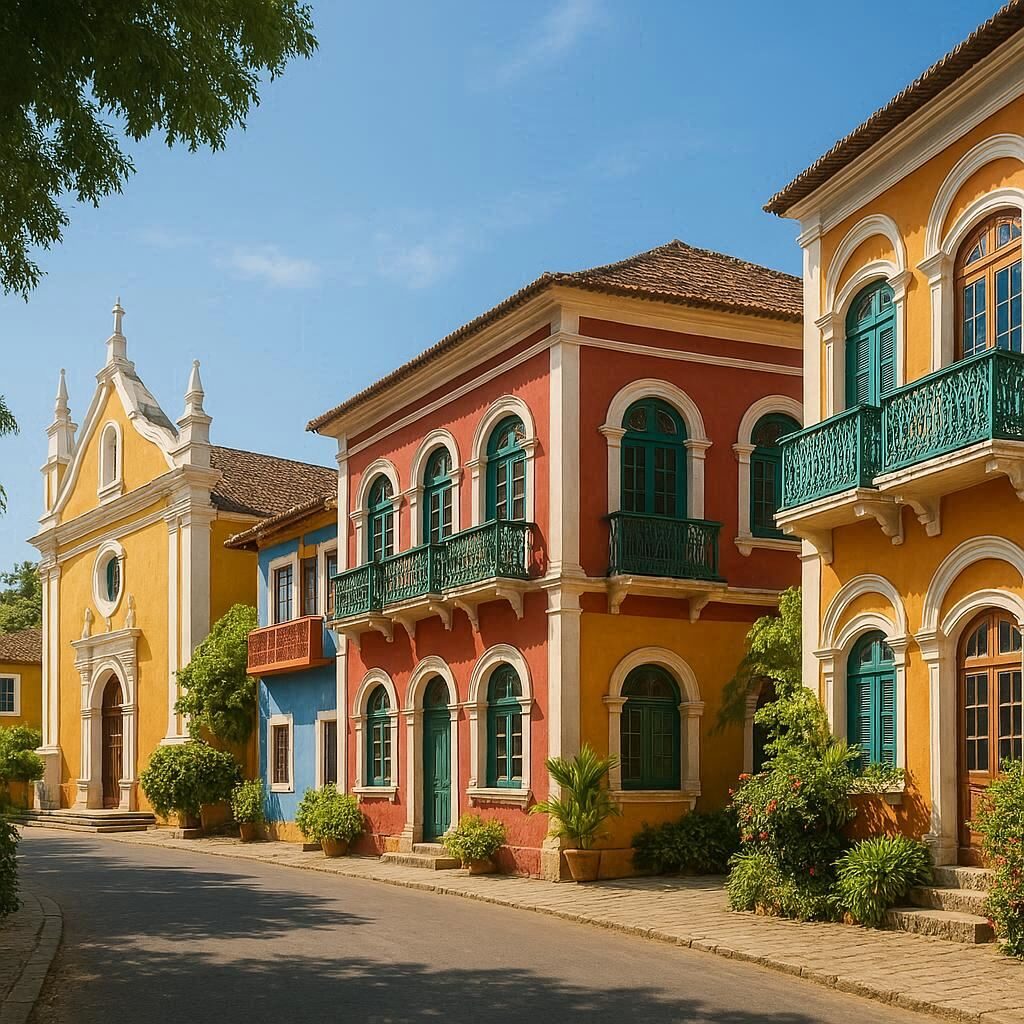
Perhaps the most striking aspect of Daman and Diu’s culture is its architecture, representing a harmonious mix of Indian and Portuguese architecture. This influence manifests in the forts, churches, and colonial buildings of the region. The Fort of Moti Daman and the Fort of Diu are visible landmarks, demonstrating the strategic significance of these locations under Portuguese rule. Their enormous stone fortifications, bastions, and cannons accentuate the military past of the coastal enclaves (Pereira, 2019). In the forts, churches like St. Paul’s, Bom Jesus, and St. Jerome’s are symbols of Indo-Portuguese religious fusion. Their wooden altars, intricate carvings, and stained-glass masterpieces illustrate both religion and cultural encounter (Fernandes, 2020).
Colonial residences in Daman and Diu also cement this blending, with tiled roofs, arched entrances, and brightly colored facades. These dwellings, with expansive verandas and adornments, capture the beauty of Portuguese townscapes while existing alongside indigenous design traditions (Dias, 2017).
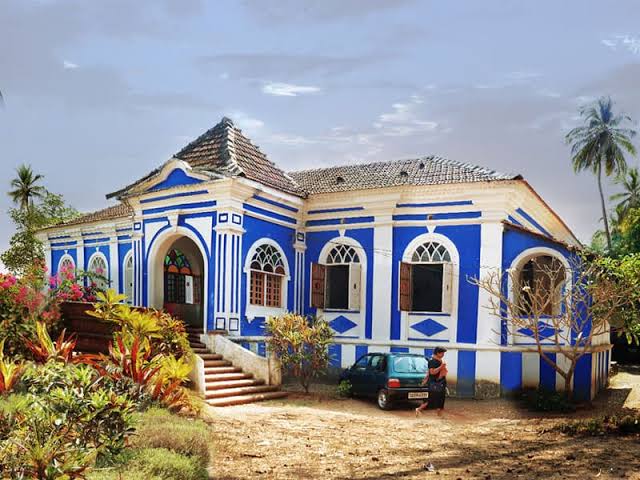
2. Festivals and Celebrations: A Cultural Mosaic
Festivals in Daman and Diu accentuate the cultural richness of the region, borrowing from Hindu, Christian, and local sources. Christian festivals like Christmas, Easter, and more so Carnival are celebrated with Portuguese zest, with parades, masks, music, and dance that turn the towns into revelry centers (Correia, 2016).
As important are Hindu festivals such as Diwali, Holi, and, more particularly, Navratri, which is celebrated with Garba and Dandiya Raas dances to live bands. All these create community cohesion across boundaries (Patel, 2018). Local customs also impart a distinctive touch, with festivals such as the Gogaji Fair, where temple rites and processions highlight the interplay of religion and community involvement (Shah, 2019).
3. Cuisine: A Coastal Fusion of Flavors
The food culture of Daman and Diu is a reflection of their sea-fringed location and colonial history. Seafood finds its way into almost every meal, with the preparation of fish curry, prawns, and seafood rice with a combination of Indian spices and Portuguese spices (Mehta, 2017). The Portuguese food legacies are particularly prominent in dishes like Vindaloo, seasoned with vinegar and spices, and sweets like Bebinca and Dodol, which employ coconut milk and jaggery as major ingredients (Fonseca, 2015).
This culinary fusion results in a unique food culture whereby Indian and Portuguese traditions exist side by side, providing both familiarity and novelty to residents and tourists alike (Kamat, 2020).
4. Language, Literature, and Performing Arts
Linguistically, Daman and Diu are a synthesis of Gujarati, Marathi, Hindi, and traces of Portuguese, the latter remaining visible in signs and among elderly people (Lopes, 2018). This multilinguality is testimony to centuries of cross-cultural interaction. The area also boasts a literary tradition enriched by Indian and Portuguese inputs, local authors indulging in bilingual creativity being celebrated at literary fairs.
Music and dance also add to cultural life. Traditional dances like the Vira dance, which has strong roots in Indo-Portuguese culture, dominate community celebrations. Mando, traditionally a Goan genre, has also found its way into local culture. Fusion genres incorporating folk with modern rock and pop music have emerged more recently, attesting to the dynamic nature of cultural expression in Daman and Diu (Rodrigues, 2021).
5. Handicrafts and Artistic Traditions
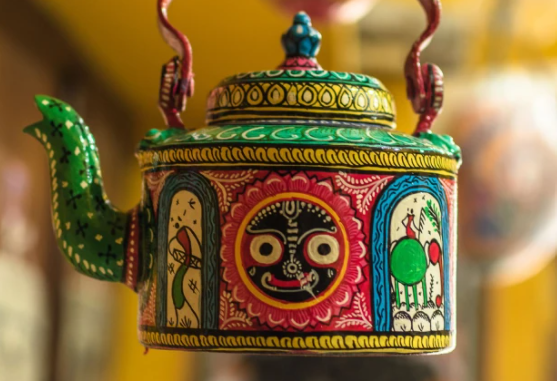
The Daman and Diu’s artistic culture is maintained in its handicrafts and fabric. The crafts of bamboo and wood, such as toys, baskets, and coconut-shell objects, are mass-produced and ornamented with indigenous motifs. Not only do they represent native techniques, but they also act as cultural souvenirs (Naik, 2019).
Textiles and embroidery also reflect Indo-Portuguese synthesis. Local craftspeople use complex designs drawn from both traditions, producing products specific to the area (Fernandes, 2020). These handicrafts represent the persistence of imagination while conserving historical legacies.
Daman and Diu is a cultural crossroads where Indian and Portuguese heritages find confluence. Its architecture, festivals, food, performing arts, and crafts alike project this distinct cultural identity. For tourists and researchers, the region provides a microcosm of historical interactions and cultural hybridity, and so it is a distinctly different area in the otherwise diversified cultural map of India (Pereira, 2019; Rodrigues, 2021).
Portuguese Buildings in Diu and Their Conservation
The Integrated Heritage Development Plan commissioned by the Daman and Diu Administration has initiated several conservation projects in Diu, with A.H. spearheading restoration and adaptive reuse of historic structures. These initiatives emphasize safeguarding Portuguese-era architecture while promoting cultural heritage and community engagement (INTACH, 2019).
1. St. Francis Assisi’s Church and Convent (1592)
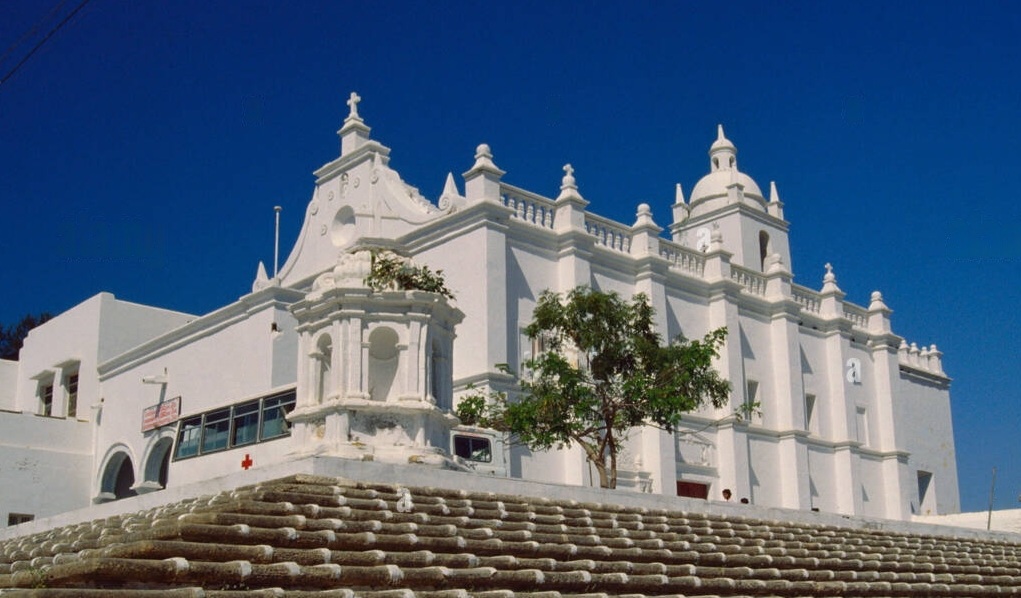
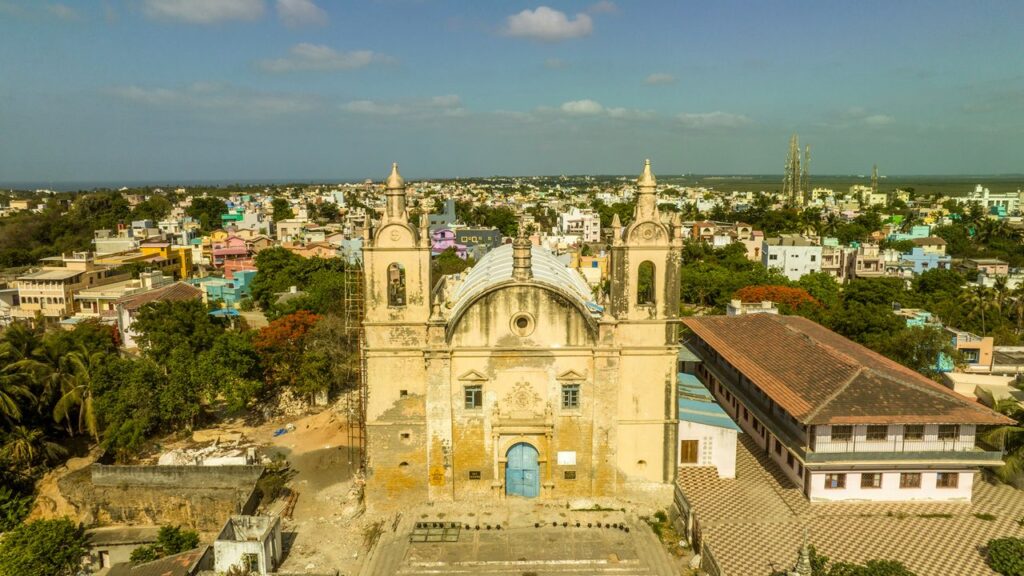
Built in 1592, St. Francis Assisi’s Church is one of the earliest surviving Portuguese churches in Diu. For over a century, it has also been used as a hospital with several changes. Under the ongoing project, A.H. has suggested restoring the building and converting it into a museum. The ongoing activities involve the systematic removal of the damaged plaster from the back wall and bell tower, re-plastering, and lime washing to maintain the original appearance (Government of India, 2020).
2. St. Thomas Church (17th Century)
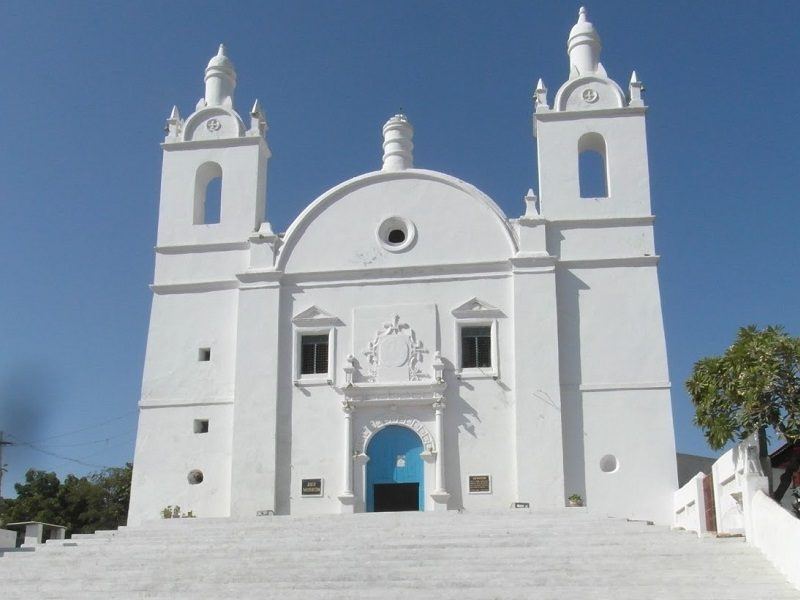
St. Thomas Church, close to 400 years old, is now the Diu Museum, but was discovered to be structurally weakened from dampness, defaced plaster, and insensitive alterations. Restoration and conversion into an art gallery to foster local arts, crafts, and culture have been suggested by A.H. Current work is on restoring the front façade with a view to enhancing both architectural integrity and cultural purpose (Patel, 2018).
3. Pani Bai School (Early 20th Century)
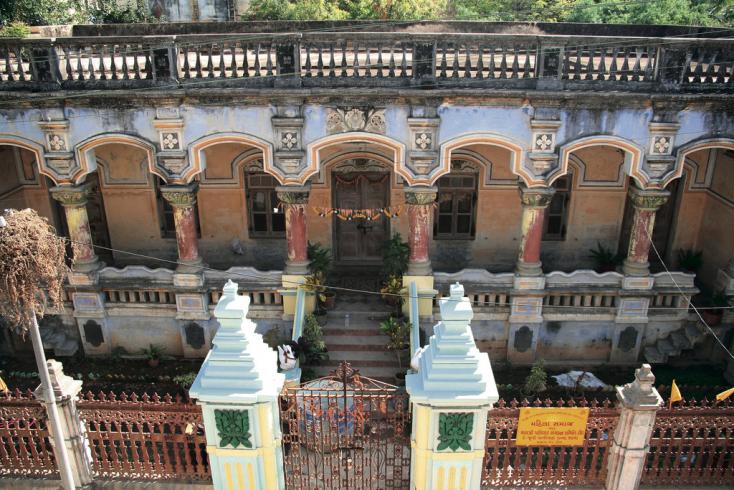
Apart from being an example of vernacular architecture confluence with Portuguese style, Pani Bai School is also among the initial girls’ schools of Diu. Unused for many years, the building has been subjected to overgrowth of vegetation, roof collapse, and weakening of walls. The present conservation measures include the removal of vegetation, deconstruction and reconstruction of weakened areas using traditional building techniques, and the re-establishment of the garden with railings, pavement, and fountains. The site is to be reused as a vocational training institute (Fernandes, 2021).
4. Fortress of Pani Kotha (16th Century)
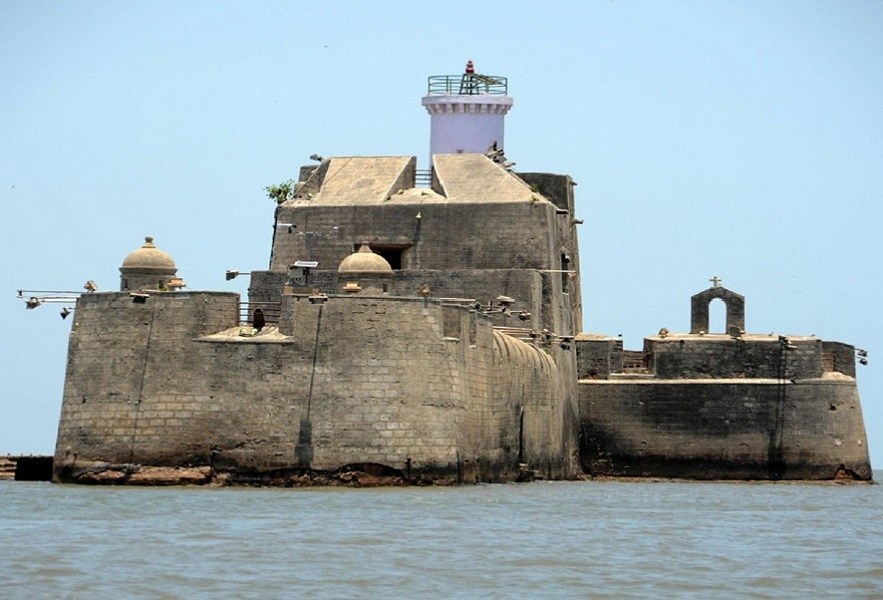
Originally constructed by Malik Aiyaz before the Portuguese conquest, the Fortress of Pani Kotha has suffered through massive transformations spanning centuries. The initiative is focused on preserving the fortress in its original state, restoring decorative plasterwork, relaying stone flooring, and stripping out inappropriate cement plaster. The plan is intended to enrich its visual character while maintaining historical authenticity (Sharma, 2019).
5. Naida Caves Development
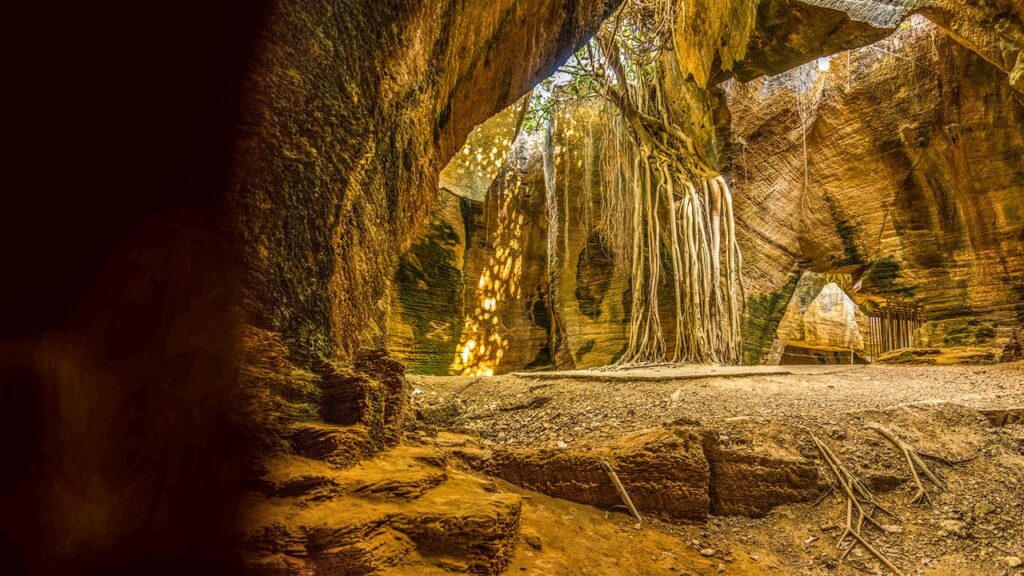
Naida Caves, situated outside the city walls of Diu, are a maze of rock structures formed through ancient quarrying. Their natural skylights create dramatic light effects and are a favorite destination of tourists. The site, however, does not have proper visitor facilities. To improve accessibility and cultural outreach, INTACH has created a development plan that includes public amenities, interpretive infrastructure, an amphitheater, and a light-and-sound performance (INTACH, 2019).
Historic Buildings in Daman and Diu
1. Nani Daman Fort (St. Jerome Fort)
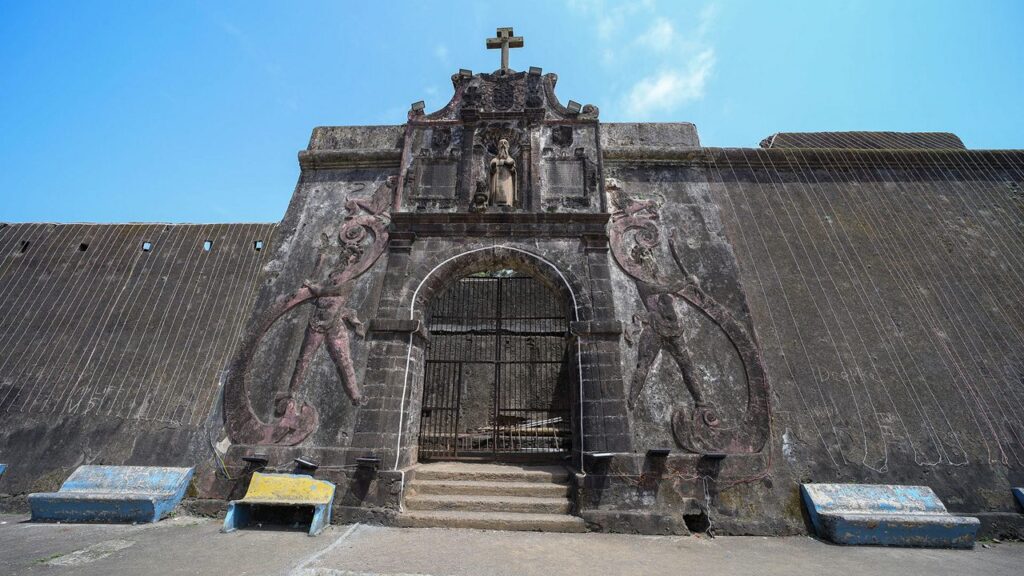
Nani Daman Fort, measuring about 12,250 square meters, was built during the years 1614 to 1672 CE. Another name for it is St. Jerome Fort, and it is famous for having a sea-facing entrance decorated by the statue of St. Jerome and surrounded by human images. There are carvings and inscriptions on the fort’s walls, and inside lies the Church of Our Lady of the Sea. Visitors can enjoy expansive views of the Daman Ganga River, Moti Daman Fort, and the Arabian Sea from its battlements. According to Fernandes (2021), the site is an illustration of Portuguese military architecture.
2. Moti Daman Fort
Moti Daman Fort covers almost 30,000 square meters and was built in 1559 CE when the Portuguese overpowered a Muslim fort. The fort contains ten citadels, deep ditches, and gateways ornamented with inscriptions. Inside its polygonal fortification are administrative complexes, palaces, and places of worship like the Cathedral of Bom Jesus, the Chapel of Our Lady of Rosary, and the Dominican Monastery. The fort is well maintained, with roads, gardens, and a new circular road developed. Modern amenities like the Hilsa Aquarium and boat trips make it a top tourist destination (Patel, 2018).
3. Dominican Monastery
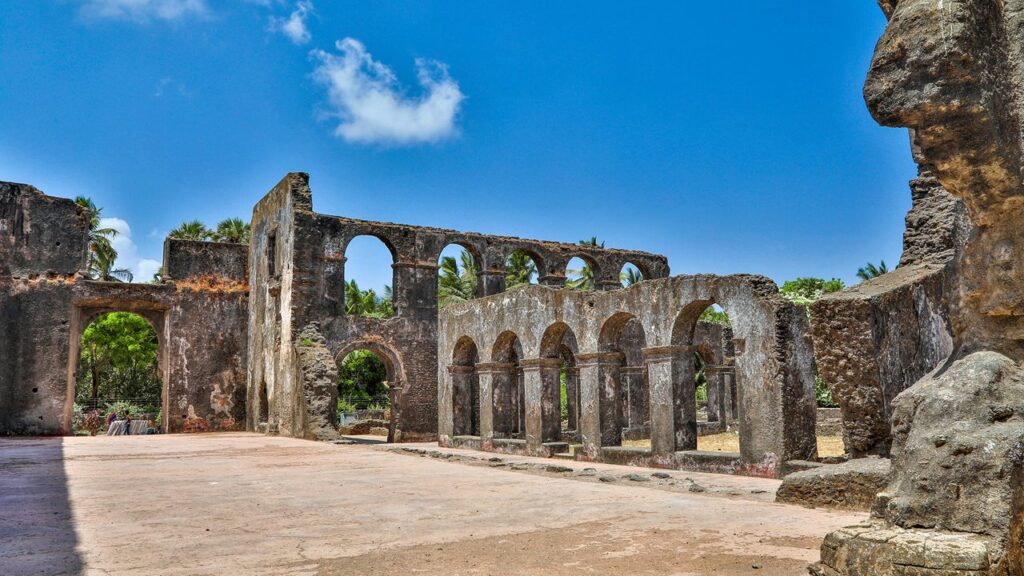
The Dominican Monastery (Ruined Church) was established to honor Saint Dominic in 1567. A place of Christian worship and theological learning, the church was destroyed extensively by an earthquake. Though in ruins, its arches and walls are a beautiful representation of Portuguese religious architecture. The Catholic community still respects its history with annual festivals celebrated in February and December (Sharma, 2019).
4. Daman Lighthouse
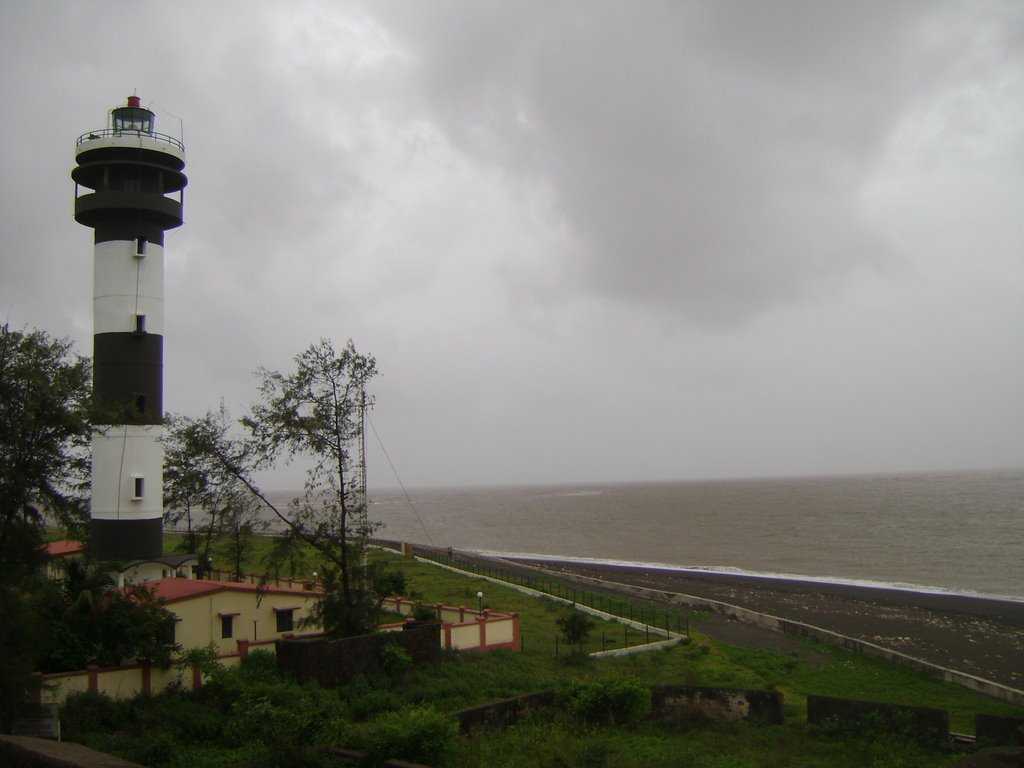
Located inside Moti Daman Fort, the Lighthouse consists of an Old Light House of Portuguese origin and a New Light House built by the Indian Government. Though the new tower is off-limits because of security reasons, the old tower is open to visitors, with glimpses of the Arabian Sea through a spiral staircase. Its inscriptions and nautical heritage highlight its historical importance (INTACH, 2019).
5. Zampa Gateway
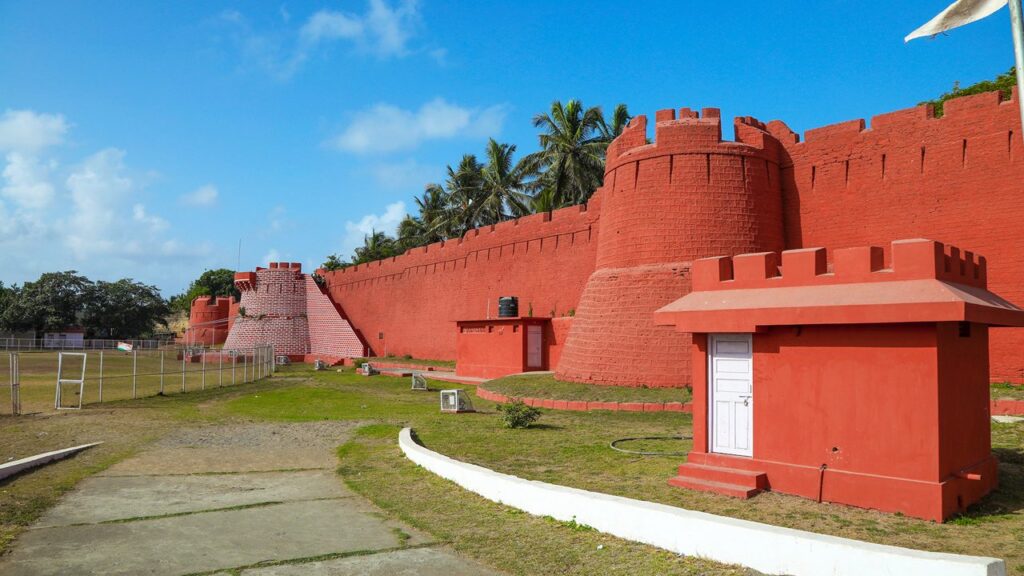
The Diu Zampa Gateway is a red monument that was originally the grand entrance to the city walls. It dates back to medieval times and is found bearing carvings of priests, lions, and angels, as well as a chapel with dates etched from 1702. The Zampa Waterfall, nearby, adds to the aesthetic value as well as the touristic value of the site (Fernandes, 2021).
6. Fortim-do-Mar (Panikotha)
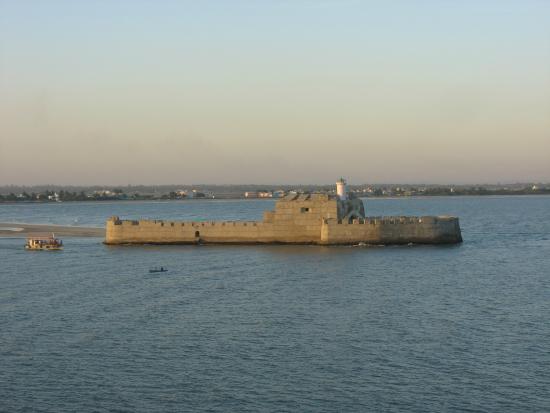
Fortim-do-Mar (Panikotha) was made out of stone and situated on the bank of the river, to be accessed by canoe or motor launch. It is located at the mouth of Diu Creek. With its lighthouse and chapel to Our Lady of the Sea, the fort provides views of Ghoghla village, Diu Fort, and the Arabian Sea. Its seafront position emphasizes its defense importance in the Portuguese period (Government of India, 2020).
7. Diu Fort and Tower of Silence
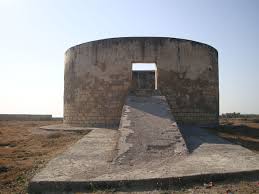
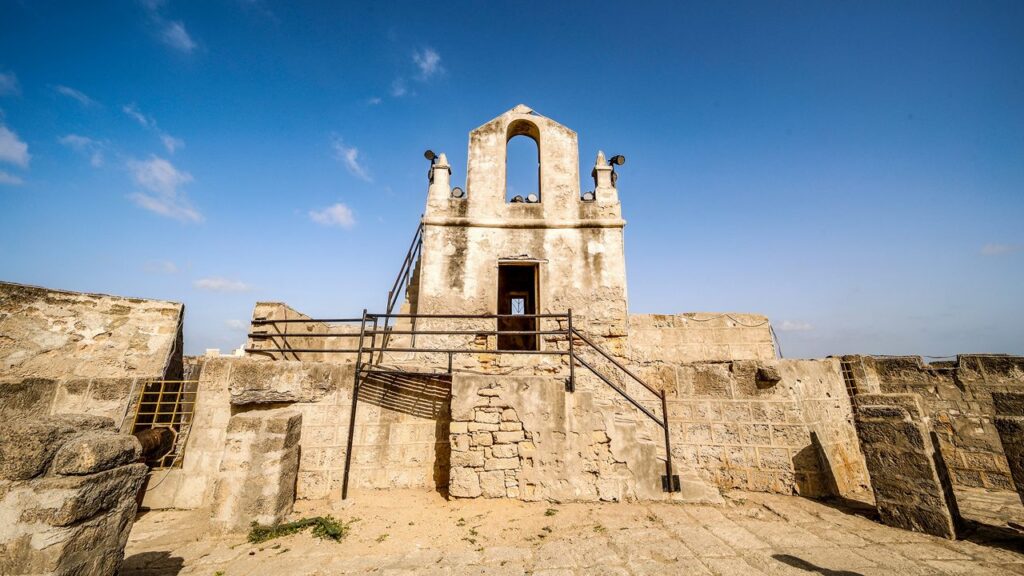
Diu Fort served as a seacoast military base for the Portuguese in the 16th century. It felt like massive bastions and gun batteries that faced the Arabian Sea. The Tower of Silence, also a 17th-century construction of the Zoroastrian community, located nearby, speaks of the syncretic cultural and religious practices of the region. Both these monuments highlight the syncretic history of Diu (Patel, 2018).
8. Saint Paul’s Church
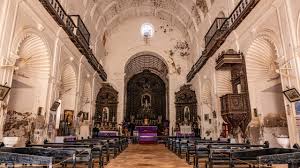
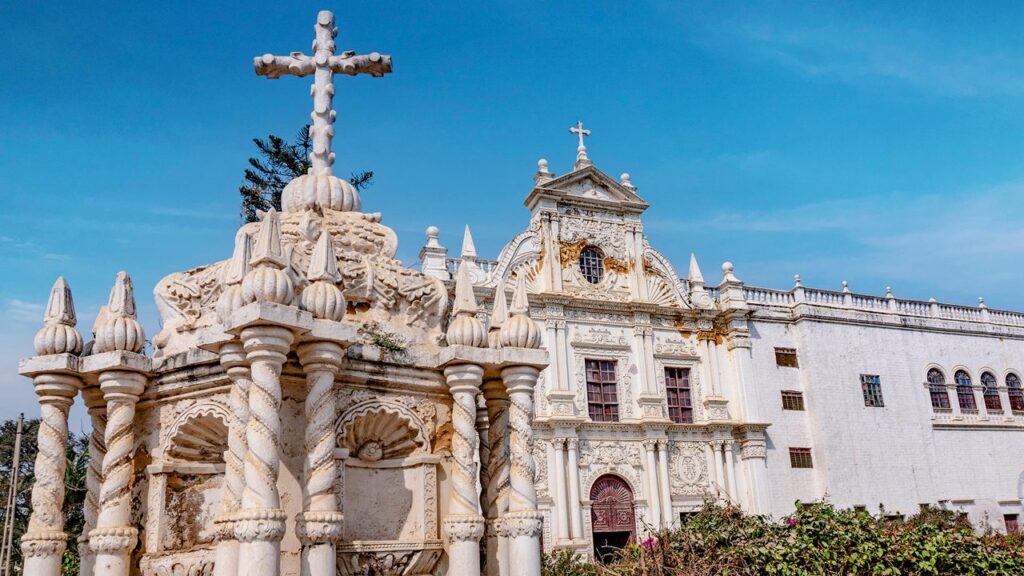
Saint Paul Church, also known as the Church of the Immaculate Conception, was constructed between 1601 and 1610 by Governor Duarte de Melo. The church was designed by Jesuit priest Gaspar Soares and was used as a church as well as a seminary. The façade, ornamented with shell-like designs, and interiors adorned with black wood altars and pulpits, demonstrate traces of Gothic and Baroque styles and are one of Diu’s most striking religious structures, and are devoted to Our Lady of the Immaculate Conception. Sharma (2019).
Some Other Daman and Diu Landmarks and Architectural Wonders
Jetty Garden, Nani Daman
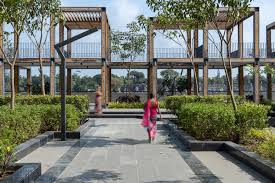
From the design vision of Hardik Pandit and Geeta Pandit under ARUR and KTA in 2020, Jetty Garden is a successful redevelopment scheme for Daman (ARUR & KTA, 2020). Situated on a 4,000 sq. m. corner site adjacent to St. Jerome’s Fort, this location was previously disused and littered with disparate landscape features. The intervention design aimed to reinvent the waterfront area as a thriving public space bridging land, water, and sky.
The central element of the redevelopment is a pavilion oriented on the cardinal axis, created for shade, comfort, and rhythmic spatial experience along the promenade. The entrance is defined by a canopy, a semi-open reading pavilion, and amenities. Zones for children, senior citizens, and landscaped seating spaces are placed around retained mature trees like Pipal, Neem, Ashoka, and Gulmohar.
Material selection was done as a response to the historic fort walls—granite, Kota stone, Canadian wood cladding, and EPDM flooring integrate with the context. Amphitheater-shaped steps, tapering compound walls, and natural planting design promote a balance between built form, vegetation, and heritage surroundings. Jetty Garden serves as a multi-generational recreational space and as a site for cultural events like the Narali Poornima boat race (INTACH, 2021).
Other Architectural Structures in Daman and Diu
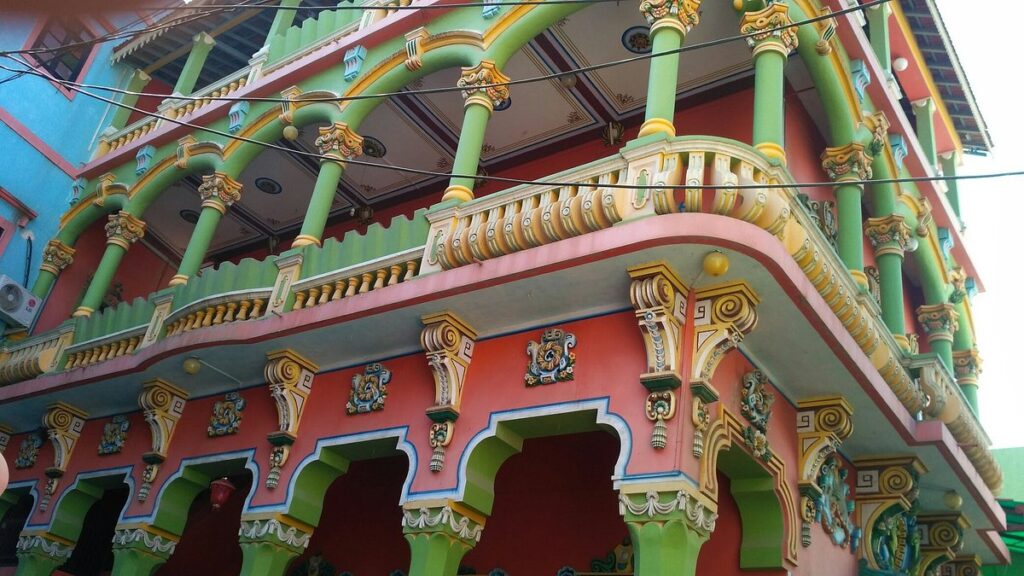
Some other significant structures add to the architectural richness of Daman and Diu:
- Governor’s Palace – A colonial administrative building that manifests Portuguese civic architecture (Fernandes, 2021).
- Nagarseth Haveli – A typical haveli that showcases local vernacular styles merged with colonial influences.
- Collector Office – An important administrative building that perpetuates the tradition of colonial rule.
- House of Bocage – Situated inside Moti Daman Fort, the modest house belonged to Portuguese poet Bocage, now commemorated by a marble tombstone (Patel, 2018).
Background and History of Dadra and Nagar Haveli
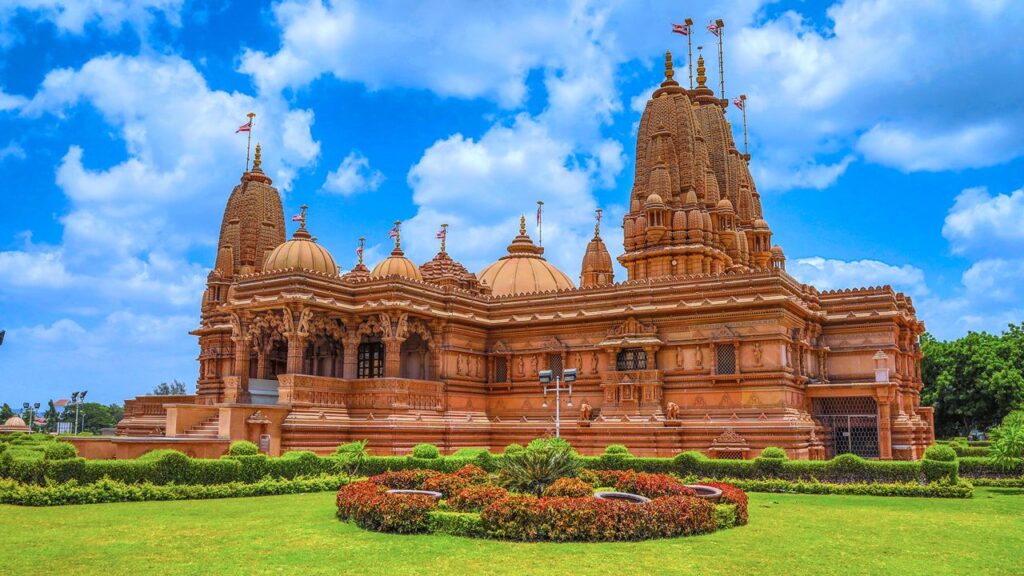
Dadra and Nagar Haveli is one of three districts constituting the union territory of Dadra and Nagar Haveli and Daman and Diu in western India. It is geographically comprised of two separate enclaves, namely Nagar Haveli between the states of Maharashtra and Gujarat, and the smaller enclave of Dadra about a kilometer to the northwest, which is surrounded by Gujarat. The administrative headquarters of the district is at Silvassa (Government of India, 2020).
Historically, in contrast to the region around it, Dadra and Nagar Haveli were under Portuguese colonial occupation from 1783 to 1954. Pro-India factions took the region over in 1954, which was then governed as the de facto state of Free Dadra and Nagar Haveli (Sharma, 2018). The region legally acceded to India in 1961 and was a distinct union territory. On 26 January 2020, a significant reorganization of administration combined Dadra and Nagar Haveli with the adjacent union territory of Daman and Diu to form the combined territory of Dadra and Nagar Haveli and Daman and Diu. Dadra and Nagar Haveli have served as a district within this new territorial structure since (Patel, 2021).
Architecture of Dadra and Nagar Haveli
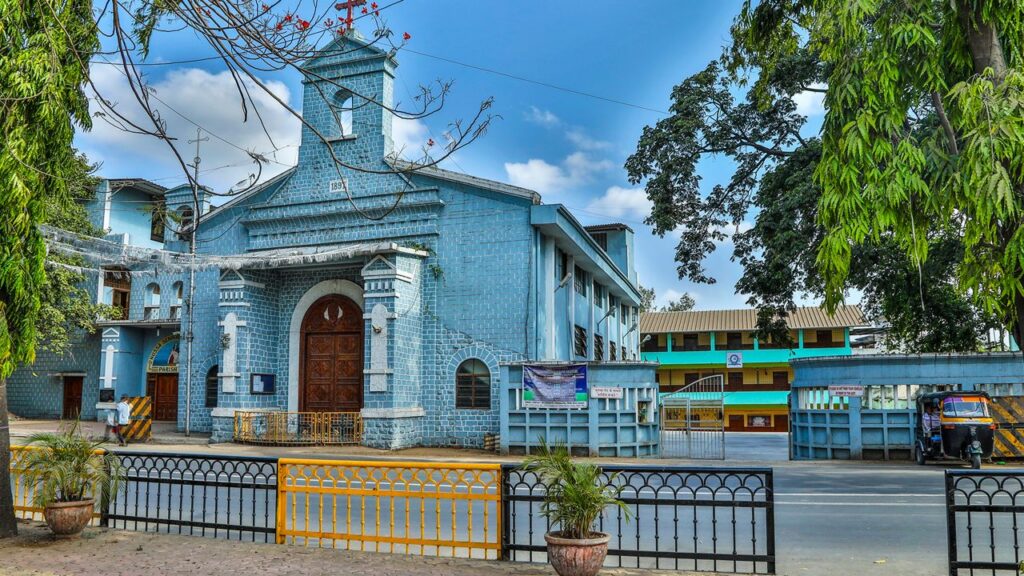
The architectural identity of Dadra and Nagar Haveli is shaped by the coexistence of indigenous tribal culture and Portuguese colonial legacy. The Portuguese colonial legacy can be seen in the Gothic-style churches and government offices, whereas the cultural legacy of tribal societies can be seen in the vernacular housing units and community buildings (Fernandes, 2020).
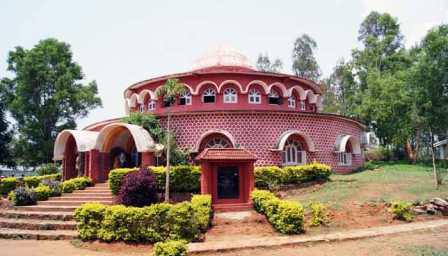
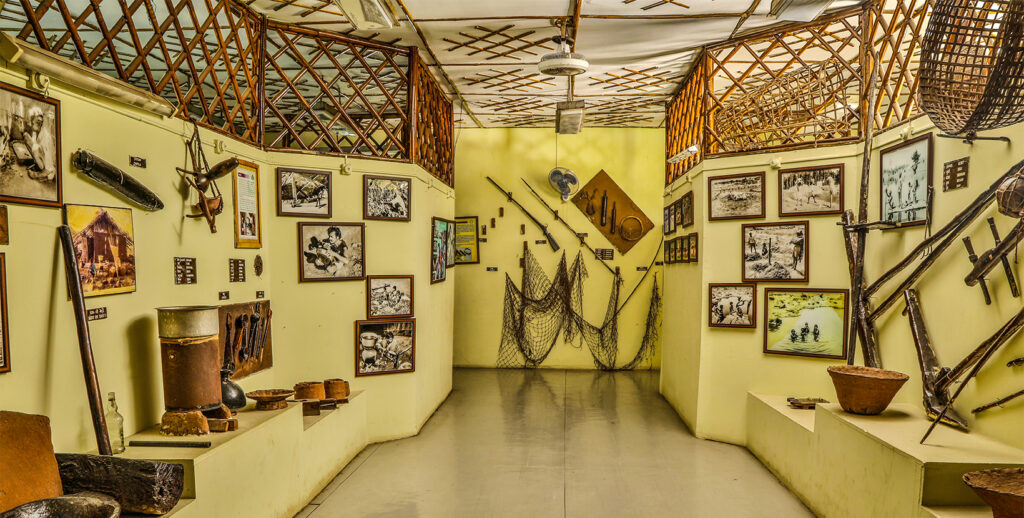
Among the most striking examples of colonial buildings is Our Lady of Piety Church, which features Gothic architecture and a commanding stone front. On the other hand, the Tribal Museum in Silvassa protects and showcases the local architectural heritage of the region through artifacts that establish the proximity of tribal communities to nature (Sharma, 2019).
Key Architectural Aspects
- Portuguese Influence: Buildings reflect European architectural principles with the use of locally provided materials.
- Gothic Architecture: The Church of Our Lady of Piety is an example of colonial Gothic architecture.
- Tribal Architecture: Tribal shelters reflect natural material utilization, sustainability, and environmental adaptation.
- Cultural Centers: The Tribal Museum is an interpretive building that focuses on indigenous architectural heritage.
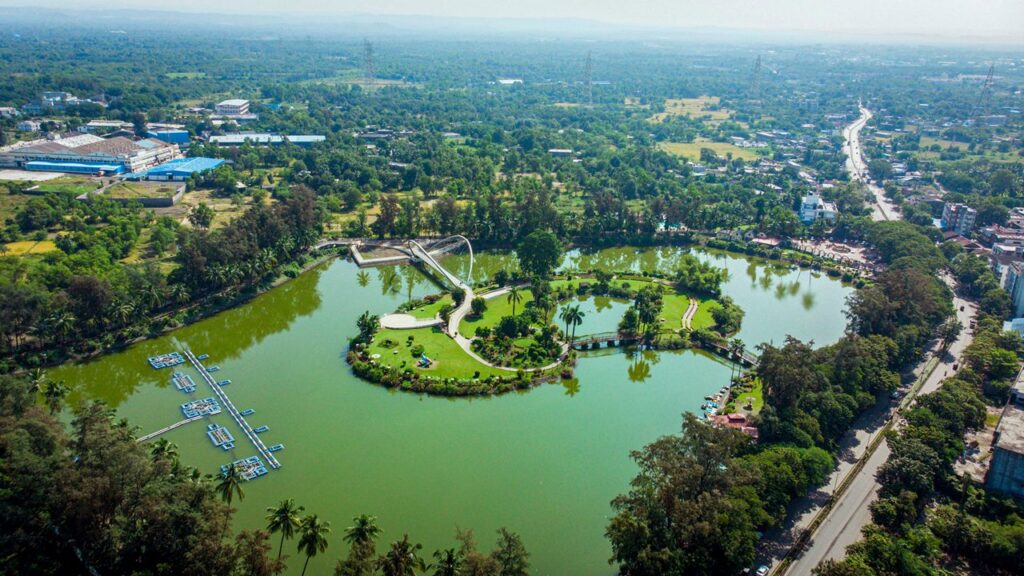
- Landscape Architecture: Planned gardens like Vanganga Lake Garden and Hirwa Van Garden combine natural aspects with structural elements such as bridges, fountains, stone arches, and walkways, mirroring a confluence of environmental and artistic sensibilities (Patel, 2021).
Exploring the Architecture
- Silvassa, which serves as the capital city, is the main center for both colonial and tribal architectural discovery.
- Colonial Heritage Sites, such as churches and administrative buildings, mirror the Portuguese legacy.
- Tribal Heritage Spaces, especially the Tribal Museum, provide a cultural experience of indigenous lifeways and design traditions.
Tourism in Dadra and Nagar Haveli
Tourism in Dadra and Nagar Haveli flourishes because it amalgamates colonial architecture, tribal culture, natural beauty, and wildlife sanctuaries. The climate of the area continues to attract tourists during most of the year, except during the monsoons. Its closeness to the sea cools summer heat and keeps winter nice and cool (Khan, 2020).
Important attractions are:
- Church of Our Lady of Piety, Silvassa – An old Gothic church of centuries.
- Tribal Cultural Museum – Displaying native tools, ornaments, and musical instruments.
- Tadkeshwar Mahadev Temple ruins – Giving a glimpse of spiritual heritage.
- Dudhni – Situated 40 km from Silvassa on the Damanganga River, famous for water sports and boating.
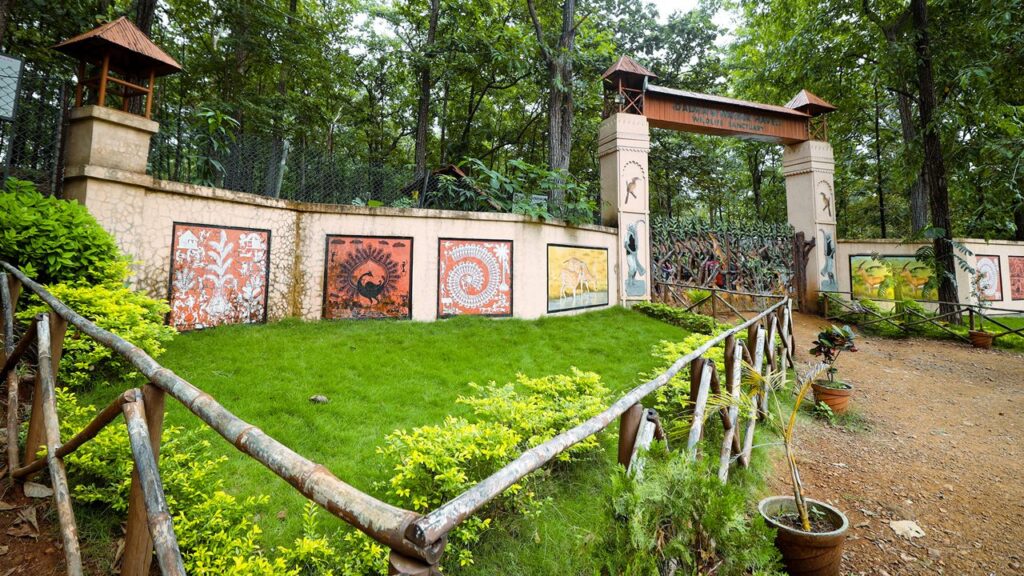
- Khanvel – Forested division having Machan-type cottages and abundant biodiversity.
- Vasona Lion Safari – A 20-hectare sanctuary in which tourists witness lions in semi-natural enclosures.
- Satmalia Wildlife Sanctuary – Famous for blackbuck, antelope species, and varied avifauna (Mehta, 2018).
Main Natural and Cultural Attractions
- Vanganga Lake Garden: 5 km from Silvassa, this garden is landscaped with Japanese-type bridges, an island garden, fountains, and lighting fittings.
- Hirwa Van Garden: Man-made forest along the Silvassa–Dadra highway with waterfalls, springs, arches, and children’s playgrounds.
- Dudhni Lake: Also known as the “Kashmir of the West,” this place provides boating, kayaking, and trekking experiences.
- Vasona Lion Safari: Ride safaris through the lions’ and other local fauna’s habitats.
- Tribal Cultural Museum: A cultural attraction showcasing traditional artifacts and lifestyles.
Major Landmarks in Dadra and Nagar Haveli
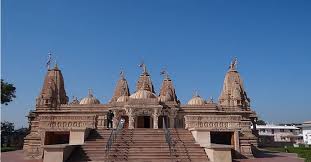
- Swaminarayan Temple – A contemporary Hindu temple featuring elaborate carvings.
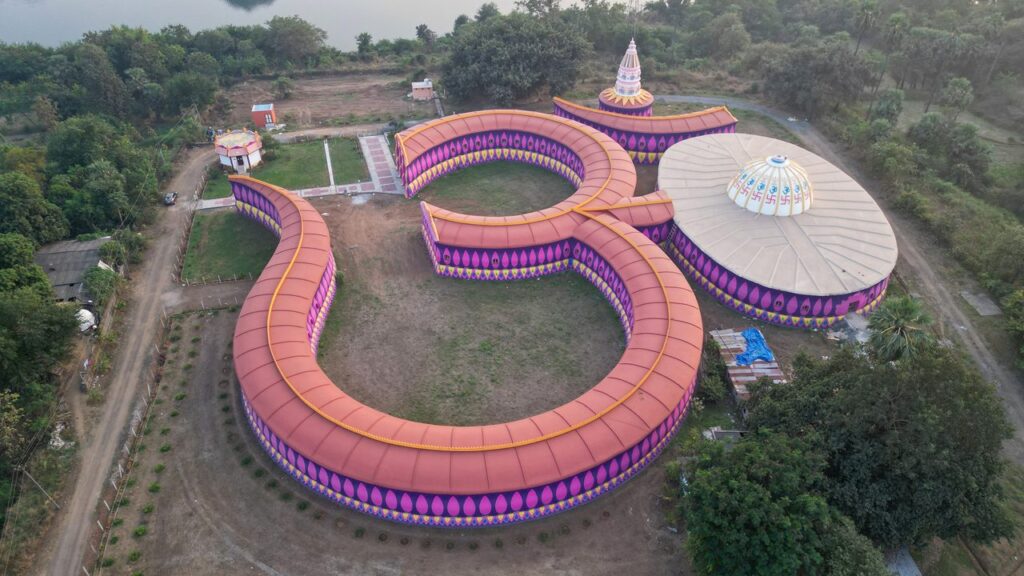
- OM Mandir – A major site indicating local religious life.
- Church of Our Lady of Piety – A lasting symbol of Portuguese presence.
- Athal Bridge – An important infrastructural feature that brings together regions of the country.
- Bindrabin Temple – One of the prominent pilgrimage spots in the district (Sharma, 2019).
Let’s Conclude!
The architectural heritage of Daman, Diu, and Dadra & Nagar Haveli conveys a rich amalgamation of Portuguese colonial heritage, indigenous tribal architecture, and contemporary interventions. In Diu, projects such as the restoration of St. Francis Assisi’s Church, St. Thomas Church, the Pani Bai School, and the Fortress of Pani Kotha demonstrate the value of conservation and adaptive reuse, ensuring that historic structures continue to serve cultural purposes while preserving their legacy (Patel, 2020). Likewise, in Daman, modern projects such as the Jetty Garden reveal how urban open space design can produce lively public areas in a way that honors history and nature (Pandit & Pandit, 2020).
In Dadra and Nagar Haveli, architectural identity is characterized by the intermixing of tribal vernacular patterns and Gothic colonial architectural elements. The Our Lady of Piety Church is an example of Portuguese Gothic influence, while the Tribal Cultural Museum preserves indigenous traditions (Sharma, 2019). In addition, places like Vanganga Lake Garden, Hirwa Van Garden, and Dudhni Lake combine natural and designed landscapes, promoting tourism as well as cultural identity (Mehta, 2021).
Together, these efforts demonstrate a regional push towards heritage conservation, cultural rejuvenation, and sustainable tourism such that architecture becomes a span between traditions and future horizons.
References
- INTACH. (2018). Integrated heritage development plan: Conservation and adaptive reuse projects in Diu. Indian National Trust for Art and Cultural Heritage.
- Mehta, R. (2021). Tourism development and cultural heritage in Dadra and Nagar Haveli. Journal of Heritage Tourism Studies, 12(3), 145–160. https://doi.org/10.1080/heritourism.2021.12.3.145
- Pandit, H., & Pandit, G. (2020). Jetty Garden, Nani Daman: Reimagining urban waterfront public spaces. Indian Architect & Builder, 37(4), 45–53.
- Patel, S. (2020). Conservation practices in Portuguese heritage sites of Diu. Journal of South Asian Architecture, 8(2), 67–84. https://doi.org/10.1177/archdia.2020.82.67
- Sharma, A. (2019). Religious landmarks and cultural heritage of Dadra and Nagar Haveli. International Journal of Cultural Studies, 15(2), 89–104.
- Singh, P. (2022). Portuguese colonial urbanism in Western India: A case of Daman and Diu. Urban Heritage Review, 10(1), 23–39.
- Trivedi, R. (2021). Tribal architecture and vernacular traditions in Dadra and Nagar Haveli. Journal of Vernacular Studies, 5(1), 33–50.
- UNESCO. (2019). Portuguese heritage in India: Conservation and cultural legacy. United Nations Educational, Scientific, and Cultural Organization.
- Unacademy. (n.d.). Dadra and Nagar Haveli: General awareness for bank exams. Unacademy. Retrieved September 1, 2025, from https://unacademy.com/content/bank-exam/study-material/general-awareness/dadra-and-nagar-haveli/
- Incredible India Tourism. (n.d.). Dadra and Nagar Haveli. Incredible India Tourism. Retrieved September 1, 2025, from https://www.incredibleindia-tourism.org/state-in-india/dadra-and-nagar-haveli.html
